If you're planning to take down a tree on your property in South Carolina, you're probably wondering one thing first: "Do I need a permit?" This guide — written by the licensed tree pros at Taylored Lawns & Tree Service — walks you through the exact rules for the state, your county, your city, and your HOA so you can start work with confidence.
The Short Answer
In most of South Carolina, you do NOT need a permit to remove a tree on your own private residential property. The state has no general tree removal permit law. However, there are important exceptions for historic districts, protected heritage trees, HOA-governed communities, and trees in the public right-of-way.
In This Guide
- South Carolina State Law on Tree Removal
- When You DO Need a Permit
- When You DON'T Need a Permit
- City & County Rules (Lexington, Columbia, Charleston, more)
- HOA & Neighborhood Tree Covenants
- Dead, Diseased & Hazardous Trees
- How to Check Before You Cut (3 Steps)
- Fines & Penalties for Illegal Removal
- FAQs
South Carolina State Law on Tree Removal
South Carolina is what's known as a "home rule" state when it comes to trees. That means the state legislature has not passed a general law requiring homeowners to get a permit before cutting down a tree. Instead, tree protection is left to individual counties, cities, and towns to regulate as they see fit.
Compared to neighboring states like North Carolina and Georgia — which have similar home-rule setups — South Carolina is actually one of the more permissive states in the Southeast for private tree removal. There is no state-level "tree cutting permit," no minimum trunk diameter that triggers a state review, and no statewide protected species list for mature shade trees on private land.
That said, South Carolina does regulate a few tree-related activities at the state level:
- Commercial logging operations on more than a few acres must register with the SC Forestry Commission and follow Best Management Practices (BMPs).
- Trees along state-maintained roads and highways (the public right-of-way) are governed by SCDOT, not the homeowner.
- Wetland and riparian buffer trees may be protected under federal Clean Water Act rules enforced by SCDHEC.
For the average homeowner with a single tree — say a leaning pine or an overgrown oak — none of those state rules come into play.
When You DO Need a Permit in South Carolina
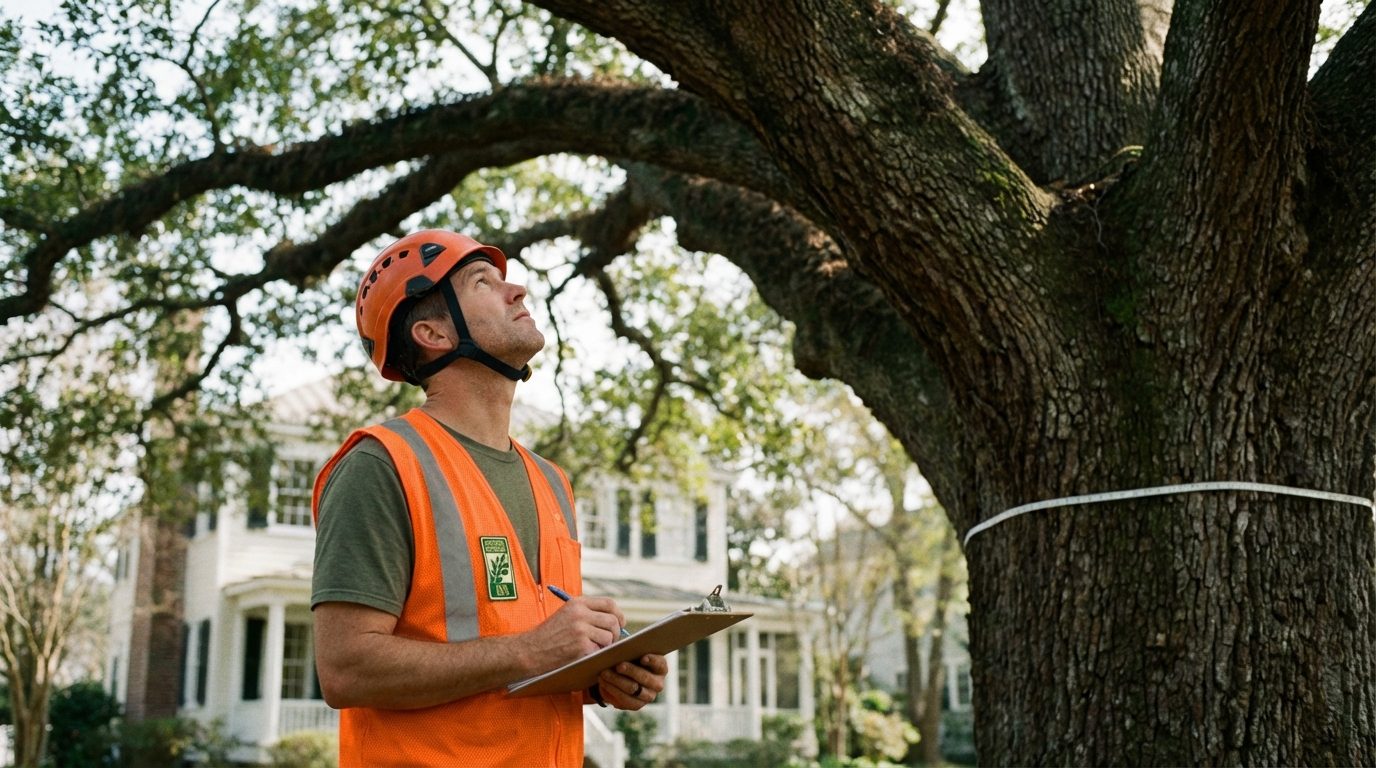
Even though there's no state-wide permit, there are five common situations where you absolutely need approval before cutting:
1. The tree is in the public right-of-way
If your tree is between the sidewalk and the curb, or growing in a city-owned strip along the road, it belongs to the city or SCDOT — not you. Removing it without a permit is illegal in every SC municipality. Contact your city's public works department or SCDOT district office before touching it.
2. You live in a historic district
Historic districts in Columbia, Charleston, Beaufort, Camden, and parts of downtown Greenville have tree protection ordinances that apply to every property, even single-family homes. In these districts, removing a tree over a certain trunk diameter (usually 8 to 12 inches DBH, or "diameter at breast height") requires a permit from the historic preservation board.
3. The tree is a protected "heritage" or "champion" tree
Some SC cities maintain lists of heritage or champion trees — large live oaks, bald cypress, or historic specimens — that are protected regardless of who owns the land. Removing a heritage tree without a permit can trigger five-figure fines.
4. Your HOA requires approval
This is the most common "gotcha." Even in parts of SC where the city doesn't regulate trees, your homeowners' association (HOA) might. Many planned communities in Lexington, Irmo, Chapin, and the Columbia metro require written HOA board approval before you remove any tree over a certain size. Violating HOA tree rules can result in fines and liens on your home.
5. The tree is in a wetland, floodplain, or riparian buffer
Trees growing within 50 feet of a lake, river, or designated wetland (including parts of Lake Murray shoreline) may be protected by SCDHEC or federal wetland rules. Clearing riparian buffers without a permit can bring federal penalties.
Not Sure If Your Tree Needs a Permit?
Call the licensed crew at Taylored Lawns. We'll check your city's ordinance, HOA covenants, and protection status — free of charge with your estimate.
When You DON'T Need a Permit
In the vast majority of residential tree removal jobs across South Carolina's Midlands, the answer is simple: no permit required. You're clear to cut if all of the following are true:
- The tree is on your own private residential property (not in the street right-of-way).
- Your property is in an unincorporated area of the county, or in a city without a tree removal ordinance.
- Your HOA either doesn't exist or doesn't regulate trees.
- The tree is not a registered heritage or champion tree.
- The tree is not in a wetland, floodplain, or protected buffer zone.
For most homeowners in Lexington, West Columbia, Irmo, and Chapin, those boxes are all checked and the job can start the same day.
City & County Tree Removal Rules Across South Carolina
Here's a quick breakdown of the most common cities and counties we get calls about:
Lexington County (Unincorporated)
No permit required for tree removal on private residential property.
Town of Lexington
No tree removal permit required for single-family homeowners.
City of West Columbia
No permit needed for trees on private property. Right-of-way trees require city approval.
Town of Irmo
No tree removal permit required. HOAs in Irmo are the main restriction to watch.
Chapin
No town-level tree permit. Lake Murray shoreline trees may have DHEC buffer rules.
City of Columbia
Protected trees in historic districts and along public streets require a permit.
Richland County
Most residential removals don't need a permit. Check zoning in historic overlays.
Charleston
Strict tree ordinance. Any "grand tree" (24"+ DBH) requires a city permit.
If your address isn't listed, the easiest path is to call your local city hall or planning department and ask: "Does the city require a permit to remove a tree on private residential property?" You'll usually get an answer in under two minutes.
HOA & Neighborhood Tree Covenants
This is where most South Carolina homeowners get tripped up. Your city may not require a permit, but your HOA almost certainly has rules. Typical HOA tree covenants include:
- Written board approval required before removing any tree over 6 or 8 inches in diameter.
- Replacement requirement — cut one, plant one (sometimes two).
- Restrictions on which species you can plant as replacements.
- Exceptions for dead, diseased, or hazardous trees with arborist documentation.
Before any work starts, dig out your HOA's Declaration of Covenants, Conditions & Restrictions (CC&Rs) — usually a PDF you received at closing or can pull from the HOA portal. Search it for "tree," "landscape," or "architectural review." If it mentions any of those, submit a request to the board first. Most HOAs turn around approvals in 7–14 days.
Dead, Diseased & Hazardous Trees: The Big Exception
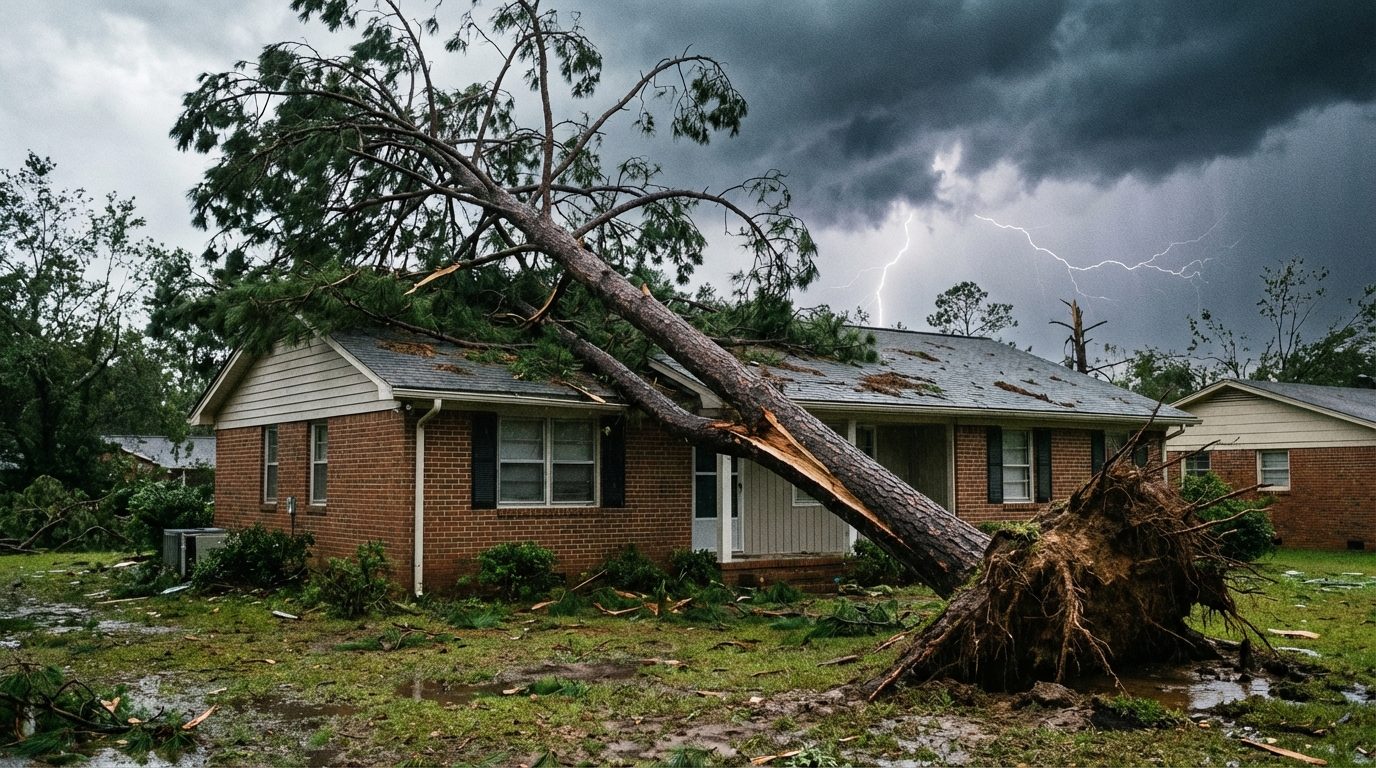
Every SC municipality with a tree ordinance carves out an exception for dead, diseased, or hazardous trees. If the tree is clearly dying, damaged by a storm, or leaning dangerously toward a home, car, or power line, you can almost always remove it quickly — but you need documentation.
The standard process is:
- Take dated photos of the tree from multiple angles before any work.
- Get a written hazard assessment from a certified arborist or licensed tree service (we provide these free with our estimates).
- If required, submit an emergency removal notification to your city or HOA within 24–72 hours after the work is done.
If a tree fell on your house, car, or fence during a storm, this is an emergency and standard permit rules don't apply — call us for 24/7 emergency tree service and document everything with photos.
How to Check Before You Cut: A 3-Step Process
Here's the fastest way to confirm whether your specific tree needs a permit:
Step 1: Identify your jurisdiction
Check your property tax bill or the county GIS website to confirm whether you're in unincorporated county, a town, or a city. The rules are different for each.
Step 2: Check city & county ordinances
Google "[your city] tree removal ordinance" or visit your municipal code on Municode. Look for any mention of "tree protection," "heritage tree," or "landscape regulations."
Step 3: Review your HOA documents
Pull up your neighborhood CC&Rs and search for "tree" or "landscape." If you find relevant rules, submit an architectural review request before scheduling any work.
Or — let us do it for you. When we come out for a free estimate, we'll flag any permit or HOA issues on the spot. We've been working in the SC Midlands since 2010 and know the local rules cold.
Fines & Penalties for Illegal Tree Removal in SC
Cutting down a protected tree without a permit is expensive. Penalties vary by jurisdiction, but here's what you can expect in the cities with the strictest rules:
Columbia & Charleston: Illegal removal of a protected tree can cost $500 to $1,000 per inch of trunk diameter, plus a requirement to replant replacement trees. A single 30-inch live oak could mean a fine of $15,000 to $30,000.
Beaufort County: Fines up to $1,000 per day the violation continues, plus double or triple replacement tree requirements.
HOA violations: Typical HOA fines run $100 to $500 per violation, plus the cost of replacement plantings. Your HOA can also place a lien on your home if fines go unpaid.
The bottom line: a 15-minute phone call to verify whether you need a permit could save you tens of thousands of dollars.
Frequently Asked Questions
Do you need a permit to remove a tree in South Carolina?
In most of South Carolina, no. The state has no general permit requirement for tree removal on private residential property. Permits are only required in specific situations: trees in the public right-of-way, protected heritage trees, historic district properties, and HOA-governed communities with tree covenants.
What is the fine for removing a tree without a permit in SC?
Fines vary by city. In Columbia, Charleston, and Beaufort County, illegal removal of a protected tree can cost $500 to $1,000 per inch of trunk diameter, plus mandatory replacement plantings. A single large oak could result in fines over $20,000.
Do I need a permit to cut down a dead tree in South Carolina?
Dead, diseased, and hazardous trees are almost always exempt from permit rules. You typically need a certified arborist's written assessment confirming the hazard, and in some cities you must submit an emergency removal notification within a few days after the work. Always photograph the tree before removal.
Does Lexington County SC require a permit to remove a tree?
No. Unincorporated Lexington County, the Town of Lexington, and the City of West Columbia do not require permits for tree removal on private residential property. HOA covenants are the most common restriction in the Lexington area.
Do I need a permit to remove a tree on my own property?
On your own private residential property in most of SC, no. The exceptions are protected heritage trees, trees in historic districts, trees in the public right-of-way, and trees regulated by your HOA. If none of those apply, you can remove the tree without a permit.
Can my neighbor remove a tree on our property line in SC?
No. Under South Carolina law, a tree whose trunk sits on the property line is jointly owned by both property owners. Neither neighbor can remove it without the other's written consent. You may trim branches and roots that cross onto your side back to the property line, but you cannot remove the tree itself.
How much does tree removal cost in the SC Midlands?
Most residential tree removals in the Lexington and West Columbia area range from $400 to $2,500. Small trees in open yards are on the low end; large oaks close to houses or power lines are on the high end. We offer free on-site estimates — give us a call at (803) 873-4293 and we'll come take a look.
Key Takeaways
- South Carolina has no statewide tree removal permit law.
- Most private residential removals in Lexington, West Columbia, Irmo, and Chapin need no permit.
- Check your city ordinance, HOA covenants, and property line status before cutting.
- Dead and hazardous trees are almost always exempt from permit rules — but get documentation.
- When in doubt, call a licensed SC tree service — we'll check for you for free.
Still have questions about a specific tree? We live and work in the Midlands and deal with SC tree ordinances every week. Call (803) 873-4293 or request a free estimate and we'll walk your property, check the local rules, and give you a straight answer on the spot.